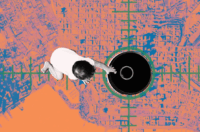
Forget your phone spying on you — maybe it’s your vacuum you should really be worried about. In a post on his blog Small World, the computer programmer and electronics enthusiast Harishankar Narayanan detailed a startling find he made about his $300 smart vacuum: it was transmitting intimate data out of his home. Narayanan had been letting his iLife A11 smart vacuum — a popular gadget that’s gained mainstream media coverage — do its thing for about a year, before he became curious about its inner workings. Read full story…
Read MoreCanadian snowbirds fingerprinted and photographed at U.S. border as part of new requirement | CBC News
Several Canadian snowbirds reported they were fingerprinted and photographed at the U.S. border this month when registering for their winter stay, which U.S. Customs and Border Protection (CBP) told CBC News is now standard procedure. Jacquie and Steve Ree of Ladysmith, B.C., arrived at the Peace Arch Border Crossing between Surrey, B.C., and Blaine, Wash., on Oct. 9. The snowbirds knew they’d have to comply with a new registration requirement for travelers staying in the United States longer than 29 days. So when a CBP officer said they could complete…
Read MoreDenmark’s postal service is dumping letter delivery. Could Canada? | CBC News
Denmark’s mail volume has declined 90 per cent over the past two decades. By the end of 2025, Denmark’s postal service will have delivered its last letter. The state-owned PostNord is getting out of the letter delivery business and will focus solely on parcels. It’s a move, the Danish postal service said, that was precipitated by the significant decline in letter volumes over the past 20 years, a development due in large part to the digitization of its society. Canada’s postal service too has encountered major mail volume decreases —…
Read MoreNova Scotia Power customers to get refund, but likely only a couple bucks apiece | CBC News
The Nova Scotia Energy Board has ordered Nova Scotia Power to refund more than a million dollars because of a costly shutdown at a coal-powered plant that critics say was avoidable. But before anyone gets dollar signs in their eyes, know that the refund will likely amount to just two or three dollars per customer. The board ordered the refund following an audit of energy costs Nova Scotia Power downloaded to customers in parts of 2022 and 2023. It acted on the recommendation of the consumer advocate, who reviewed the…
Read MoreHere’s why you could be ‘debanked’ by your financial institution | CTV News
More than 100 people have come forward to share their experiences with being dumped by their banks after CTV News reported on RBC cutting ties with a decades-long customer with no explanation. Tomas Nassab, of Alliston, told CTV News last month that he received a letter from RBC informing him that they were ending their banking relationship with him and that he would be given 30 days to close his accounts and move his money out of the bank. Following the publication of the story, CTV News heard from dozens…
Read MoreHow fraudsters are using crypto ATMs to launder millions from Canadian scam victim | CBC News
Brenda Smith didn’t know what a cryptocurrency ATM was before she was directed to deposit more than $12,000 cash into two of the machines last year as part of an elaborate cyber scam. The 76-year-old Calgary retiree suffered a stroke a few months before that, which she says was affecting her cognitively. “They’re so convincing, and unfortunately I was vulnerable,” Smith said. Read full story here: How fraudsters are using crypto ATMs to launder millions from Canadian scam victim | CBC News
Read MoreNova Scotia Power proposes single-digit rate hikes for next 2 years | CBC News
Nova Scotia Power says it will apply later this month to raise rates in 2026 and 2027 to help pay for $1.3 billion in maintenance and improvements to the electricity grid, while continuing to hit the publicly traded company’s target profit margin. The average rate increase for all customers would be 2.1 per cent for each of the next two years, with the residential rate going up about 4.1 per cent each year. The rate hikes would take effect on Jan. 1 of each year. Read full story here: Nova…
Read MoreCanadians caught in crossfire as U.S. customs searches of electronic devices rise at borders | CBC News
U.S. Customs and Border Protection (CBP) has released new data showing a sharp rise in electronic device searches at border crossings. From April to June alone, CBP conducted 14,899 electronic device searches, up more than 21 per cent from the previous quarter (23 per cent over the same period last year). Most of those were basic searches, but 1,075 were “advanced,” allowing officers to copy and analyze device contents. While electronic device searches jumped by 12.6 per cent over the past year, the total number of travellers entering the United…
Read MoreCanadians’ health data at risk of being handed over to U.S. authorities, experts warn | CBC News
Canadians’ electronic health records need more protections to prevent foreign entities from accessing patient data, according to commentary in the Canadian Medical Association Journal. “Canadian privacy law is badly outdated,” said Michael Geist, law professor and Canada Research Chair in internet and e-commerce law at the University of Ottawa and co-author of the commentary. “We’re now talking about decades since the last major change.” Geist says electronic medical records systems from clinics and hospitals — containing patients’ personal health information — are often controlled by U.S. companies. The data is…
Read MoreScientists develop method to identify people by how their bodies disrupt Wi-Fi | TechSpot
A hot potato: As Wi-Fi spreads everywhere, a new technology could identify you just by how your body disturbs wireless signals – no cameras, no devices needed. This breakthrough raises urgent questions about privacy in a world where invisible tracking might soon become routine. Researchers at La Sapienza University of Rome have developed a method they say can re-identify individuals based solely on how their bodies disrupt Wi-Fi signals – a breakthrough likely to reignite debates over privacy and surveillance. The technique is more powerful and less invasive than biometric…
Read More