As Google For Education Tools Enter Classrooms Across Canada, Some Parents Are Asking To Opt-out | CBC Radio

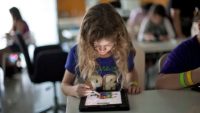
Last October, Riaz Bassari’s daughter came home from her elementary school class with a permission form for G Suite for Education: a set of cloud-based digital learning tools Google offers to schools for free. The form, issued by the Greater Victoria School District in B.C., asked Bassari to agree that “my child’s personal information will be used for a Google Apps for Education account.” Bassari, however, decided to not to sign the form, and soon discovered there was no alternative to Google’s tools at his daughter’s school. “You either sign up or you’re left out,” Bassari…

Read More

A Trip To The ER With Your Phone May Mean Injury Lawyer Ads For Weeks | Ars Technica

With digital traps in hospitals, there’s no need for personal injury lawyers to chase ambulances these days. Law firms are using geofencing in hospital emergency rooms to target advertisements to patients’ mobile devices as they seek medical care, according to Philadelphia public radio station WHYY. Geofencing can essentially create a digital perimeter around certain locations and target location-aware devices within the borders of those locations. Patients who unwittingly jump that digital fence may see targeted ads for more than a month, and on multiple devices, the outlet notes. While the…

Read More

Google’s Selfish Ledger Ideas Can Be Found In Its Patent Applications – The Verge

I trust by now we’ve all seen and been at least a little disturbed by The Selfish Ledger, the nearly 9-minute-long concept video from inside Google’s “moonshot factory” X labs. In the wake of it becoming public this week, Google quickly disavowed the video, claiming it was just a thought experiment “not related to any current or future products.” And yet, the company’s patent applications exhibit a mode of thinking that runs at least in parallel, if not on the exact same tracks, as The Selfish Ledger’s total data collection…

Read More

Chinese School Uses Facial Recognition To Make Kids Pay Attention | Engadget

Civilian surveillance in China has seen a boom in recent times, with facial recognition leading the charge in the technologies used to keep tabs on the population. Police are scanning travelers with facial recognition glasses, authorities are using the tech to monitor ethnic minorities — now the Orwellian technology has a new target: kids. According to government-run Chinese website Hangzhou.com, a school has installed facial recognition technology to monitor how attentive students are in class. Three cameras have been installed above a blackboard at Hangzhou Number 11 High School in…

Read More

CLOUD Act Becomes Law, Increases Government Access To Online Info – c|net

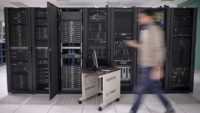
The federal spending bill includes provisions that lower barriers to law enforcement requests for your emails, documents and other internet communications. The CLOUD Act makes it easier for law enforcement to access data stored on servers overseas. Pictured is a server rack in Hong Kong. The federal spending bill signed by US President Donald Trump on Friday does more than fund the budget. It also makes it easier for law enforcement agencies to demand access to online information no matter what country the data is stored in. Lawmakers added the…

Read More

Paper Documents In Hospitals Not Always Properly Destroyed: Study | CTV News

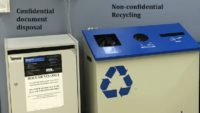
It was while sitting in a doctors’ lounge and watching a janitor take away a huge recycling bin that Dr. Nancy Baxter stumbled on a major problem with the way hospitals operate. Inside that bin, she saw paperwork containing the personal medical information of hospital patients. It was paperwork that should have been shredded, but instead, the janitor was planning to take it to recycling. The types of bins available in many hospitals, designating where sensitive documents and where recycling should go. She soon discovered it’s a disturbing amount. Dr.…

Read More

U.S. Border Guards Can Search Your Phone: Here Are Some Details On How – Technology & Science – CBC News

In one of several testy exchanges during a U.S. Senate hearing this week, the country’s secretary of homeland security was pressed to explain a new policy that allows customs agents to examine the cellphones of travellers at the border. “I want to make sure I understand this. I live an hour’s drive from the Canadian border,” said Vermont Sen. Patrick Leahy. “If I go to Canada and visit some of my wife’s relatives, and I come back … they [can] say, ‘We want your laptop and your phone and your pass…

Read More

Spies More Free To Use Cellphone Surveillance Tech Without Warrant, Under Court Ruling – Technology & Science – CBC News

A federal court judge has ruled that Canada’s domestic spy agency can continue to use contentious cellphone surveillance devices without a warrant, in some cases. For several years, the Canadian Security Intelligence Service (CSIS) has used a device it calls a Cell Site Simulator (CSS) to collect information about cellphones and other cellular-capable devices — such as some laptops or tablets — during its national security investigations. The devices are perhaps better known as IMSI Catchers or Stingrays, and pretend to be legitimate cellphone towers in order to collect information. Privacy…

Read More

Canada’s NAFTA Negotiators Must Do More To Protect Canadians’ Data From U.S.: Privacy Experts – National | Globalnews.ca

OTTAWA – Concern is growing that federal negotiators aren’t doing enough to protect the personal information of Canadians from prying U.S. interests at the North American Free Trade Agreement negotiations. Information technology companies and other digital economy insiders say federal negotiators appeared unprepared during this week’s third round of talks to counter an American proposal that would forbid the storage of sensitive data in computing facilities on Canadian soil. Some warned that Canada appeared soft on the issue and might concede to the American demands in the interest of horse-trading…

Read More

Canada’s Border Agency To Start Tracking The Number Of Cellphone Searches – Technology & Science – CBC News

The Canada Border Services Agency will begin tracking the number of cellphones its officers search at the border, and will provide Canadians their first glimpse into the frequency of those searches after six months. “Right now we’re not tracking separately how many cellphone searches we have done,” said Martin Bolduc, vice-president of the agency’s programs branch, in a meeting before the House of Commons standing committee on access to information, privacy and ethics on Wednesday. But a few weeks ago, he told his team to start. CBSA has long maintained that it…

Read More